

Proven Strategies to Reduce OTA Commission for Hotels
Online Travel Agencies (OTAs) have transformed the hospitality industry. They help hotels gain visibility, increase occupancy, and attract international travelers. However, the convenience comes at a cost, high commission fees that can significantly reduce hotel profitability.
In Europe, many independent hotels and boutique properties pay between 15% and 25% commission per booking to OTAs. In some cases, preferred placement programs push commissions even higher. For hotels operating on tight margins, reducing OTA dependency is essential for sustainable growth.
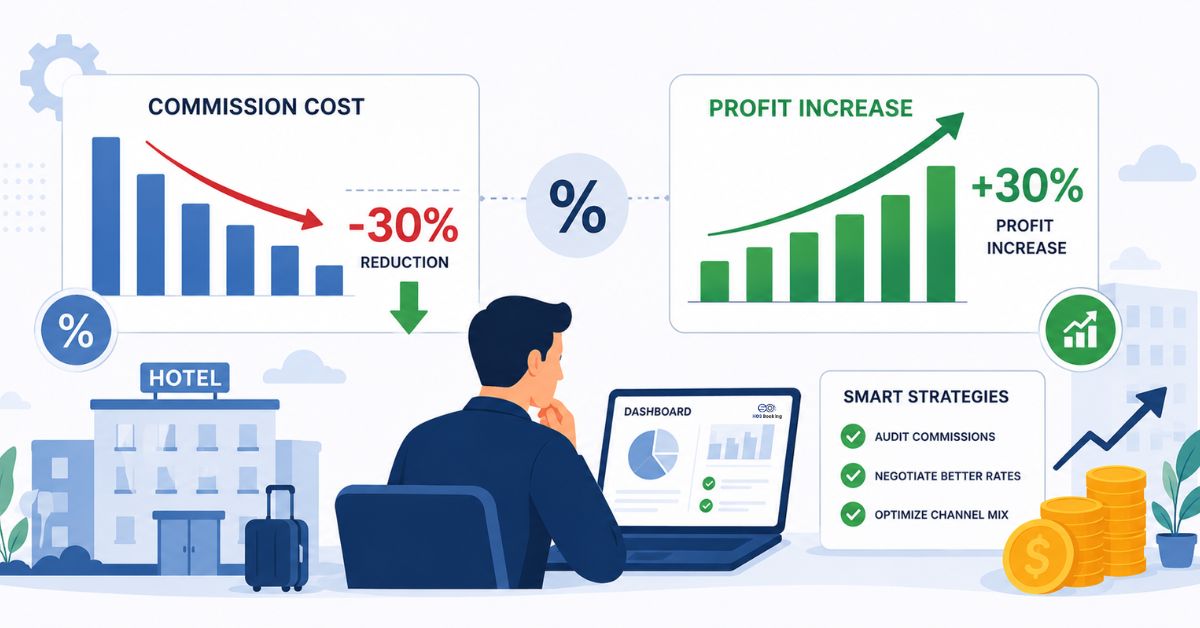
The good news? Hotels can reduce OTA commission costs by up to 30% without sacrificing occupancy rates. By using a modern hotel channel manager, investing in hotel automation, improving direct bookings, and implementing a smart hotel management system, hotels can regain control of their revenue strategy.
Why OTA Commission Costs Are Hurting Hotel Profitability?
Most hotels rely heavily on OTAs because they deliver instant exposure and bookings. But over time, excessive OTA dependency creates several challenges:
- Lower profit margins
- Loss of customer ownership
- Increased competition on price
- Reduced brand loyalty
- Limited guest data access
Industry research shows OTA commissions typically range from 15% to 25%, while direct-booking acquisition costs can be as low as 3.5% to 12% when hotels use effective digital strategies and hotel automation tools.
A 40-room hotel operating with a 45% OTA booking share can lose more than €140,000 annually in commissions. Reducing OTA dependency by just 8–12 percentage points can save approximately €27,000 per year.
This is why European hotels are increasingly investing in direct booking technology and automated hotel operations.
7 Key Strategies that Reduce OTA Commission Costs for Hotels
1. Invest in a Powerful Hotel Channel Manager
One of the most effective ways to reduce OTA commission costs is by implementing a reliable hotel channel manager. A hotel channel manager allows hotels to distribute room inventory across multiple booking platforms while maintaining real-time rate and availability synchronization.
Without a channel manager, hotels often rely too heavily on one or two OTAs because manual inventory management becomes difficult and time-consuming.
Benefits of a Hotel Channel Manager
- Real-time inventory updates
- Reduced overbookings
- Better rate control
- Easier distribution diversification
- Increased direct booking opportunities
Hotels using a hotel channel manager can expand their visibility beyond dominant OTAs and create a balanced distribution strategy.
Instead of depending entirely on OTAs, hotels can optimize multiple sales channels, including:
- Google Hotel Ads Direct website bookings
- Regional OTAs
- Metasearch engines
- Corporate booking platforms
According to recent hospitality studies, hotels with diversified booking channels recover between 6% and 18% of OTA share within 9 months.
That reduction directly translates into lower commission expenses and higher net revenue.
2. Build a Strong Direct Booking Strategy
Direct bookings are the foundation of commission-free revenue growth. Modern travelers increasingly prefer booking directly with hotels when the experience is smooth, mobile-friendly, and trustworthy.
Research from the hospitality sector shows direct bookings often generate significantly higher revenue per reservation compared to OTA bookings.
How to Increase Direct Hotel Bookings?
Optimize Your Hotel Website
Your hotel website should function as a high-converting booking platform rather than just an online brochure.
Essential features include:
- Fast loading speed
- Mobile optimization
- Secure payment gateway
- Simple booking engine
- Clear call-to-actions
- Multiple language support for European markets
Many travelers abandon direct bookings because hotel websites are slow or complicated. Community discussions on Reddit frequently mention poor booking experiences as a major reason travelers return to OTAs.
Offer Direct Booking Incentives
Hotels can legally encourage direct bookings in many European countries by offering:
- Free breakfast
- Flexible cancellation
- Late checkout
- Welcome drinks
- Loyalty discounts
Guests often choose direct bookings when they see additional value.
3. Implement Hotel Automation Technology
Hotel automation is becoming essential for modern hospitality businesses. Automation reduces manual tasks, improves guest experiences, and lowers operational costs, all while helping hotels compete more effectively against OTAs.
Areas Where Hotel Automation Helps
Automated Guest Communication Hotels can automatically send:
- Booking confirmations
- Pre-arrival emails
- Upsell offers
- Check-in instructions
- Post-stay feedback requests
This improves guest engagement and increases repeat bookings.
Automated Pricing and Revenue Management
Dynamic pricing tools help hotels adjust rates based on:
- Demand
- Occupancy
- Competitor pricing
- Seasonality
- Local events
This prevents underpricing and improves profitability.
4. Use a Modern Hotel Management System
A modern hotel management system is important for reducing OTA costs and improving operational efficiency. Many hotels still use outdated systems that lack integration capabilities, analytics, and automation tools.
Today’s advanced hotel management software solutions centralize operations into one platform.
Key Features to Look For
- Integrated booking engine
- PMS integration
- Channel management
- Revenue management tools
- Smart lock system
- Automated reporting
- Digital guest journey
When your hotel management system connects directly with your hotel channel manager and website booking engine, you create a seamless ecosystem that supports direct revenue growth.
Hotels can then track:
- OTA performance
- Cost per acquisition
- Booking source profitability
- Guest behavior
- Repeat booking rates
This data-driven approach allows hotels to reduce low-performing OTA dependency and prioritize high-margin booking channels.
5. Improve Guest Retention and Loyalty
OTA guests usually belong to the OTA platform, not the hotel. That means hotels often lose future marketing opportunities.
However, once guests stay at your property, you can convert them into loyal direct customers.
Effective Guest Retention Strategies
Create a Loyalty Program
Offer repeat guests:
- Member-only discounts
- Free upgrades
- Early check-in
- Exclusive packages
Collect First-Party Guest Data
Encourage guests to book directly next time through:
- Email marketing
- SMS campaigns
- Personalized offers
- Seasonal promotions
Deliver Exceptional Guest Experiences
Happy guests naturally prefer direct bookings for future stays. Hotels that personalize guest communication and provide seamless experiences build stronger customer relationships.
According to hospitality research, direct guests tend to spend more on-property and show lower cancellation rates compared to OTA guests.

6. Leverage Google Hotel Ads and Metasearch
Google Hotel Ads is one of the most powerful tools for reducing OTA commission dependency. Instead of paying 15%–25% OTA commission, hotels can drive direct bookings at significantly lower acquisition costs.
When integrated with a hotel channel manager and booking engine, Google Hotel Ads allows travelers to book directly from Google search results.
Why Google Hotel Ads Matter?
- Higher visibility
- Lower acquisition cost
- Better direct conversion rates
- Improved brand visibility
- Reduced OTA reliance
For European hotels competing in major tourism markets, Google Hotel Ads can dramatically improve direct booking share.
7. Partner with Smart Hospitality Technology Providers
Technology partnerships play a major role in reducing OTA dependency. Solutions like HOS Booking help hotels simplify booking management, improve automation, and optimize direct revenue channels.
By integrating:
- Hotel channel manager tools
- Hotel automation systems
- Booking engines
- Revenue management solutions
- Hotel management system software
Hotels can create a scalable, commission-efficient business model.
The future of hospitality belongs to hotels that own their customer relationships and reduce dependency on third-party booking platforms.
The Future of Hotel Distribution in Europe
The European hotel industry is rapidly shifting toward direct booking strategies. Changes in rate parity regulations, growing digital competition, and rising OTA costs are forcing hotels to rethink distribution models.
Hotels that embrace hotel automation, modern hotel management software, and intelligent channel distribution strategies are already outperforming competitors.
The goal is not to eliminate OTAs.
OTAs still provide valuable exposure and demand generation. The objective is to create a healthier booking mix where direct reservations become the primary revenue driver.
Smarter Distribution Means Higher Hotel Profitability
Reducing OTA commission costs by 30% is completely achievable when hotels combine the right technology with a strong direct booking strategy. By using a hotel channel manager, implementing hotel automation, and upgrading to a modern hotel management system, hotels can reduce dependency on third-party platforms while increasing direct revenue and operational efficiency.
The future of hospitality in Europe will favor hotels that control their guest relationships, automate operations, and optimize distribution channels intelligently. Solutions like HOS Booking help hotels streamline bookings, improve profitability, and create a sustainable long-term growth strategy with lower OTA commission expenses.
