


How to Increase Direct Hotel Bookings?
For many small and mid-sized hotels, direct bookings are the key to sustainable growth. Yet independent properties often struggle with heavy dependence on online travel agencies (OTAs), high commission fees, inconsistent occupancy, and limited marketing resources. This challenge becomes even more intense for boutique properties with fewer rooms and smaller operational teams.
Our 20-room hotel faced the same situation.
At one point, most of our reservations came from third-party booking sites. While OTAs helped us gain visibility, they also reduced our profit margins and limited our ability to build direct relationships with guests. Direct bookings were relatively low, and managing reservations across multiple channels became complicated and time-consuming.
The Biggest Challenges Small Hotels
Independent hotels often encounter several obstacles when trying to grow direct bookings.
1. Overdependence on OTAs
OTAs provide exposure, but they also charge high commissions that reduce profitability. Many small hotels rely too heavily on these platforms because they lack the technology or marketing systems needed to attract direct guests.
2. Manual Reservation Management
Without efficient hotel management software, staff members spend countless hours updating room availability manually across websites and booking channels. This increases the risk of overbookings and operational errors.
3. Poor Website Booking Experience
Guests expect fast and seamless online reservations. If a hotel website is outdated or lacks a proper hotel booking platform, visitors are more likely to leave and book elsewhere.
4. Limited Guest Data and Personalization
Hotels that rely mainly on third-party platforms often have limited access to guest information, making it difficult to personalize experiences or encourage repeat bookings.
Our hotel experienced all these challenges before making the switch to a fully integrated digital system.
Why Invest in Hotel Management Software?
Initially, we believed that only large hotels needed advanced technology systems. However, as competition increased and guest expectations evolved, it became clear that even a 20-room property needed automation and centralized management.
We realized that we needed a solution that could:
- Simplify hotel operations
- Improve reservation accuracy
- Increase direct bookings
- Reduce OTA dependency
- Provide a better guest experience
- Save staff time
- Improve revenue management
After evaluating several options, we implemented a complete hotel management software system integrated with HOS Booking, a hotel channel manager, and a modern hotel booking platform.
The results exceeded our expectations.
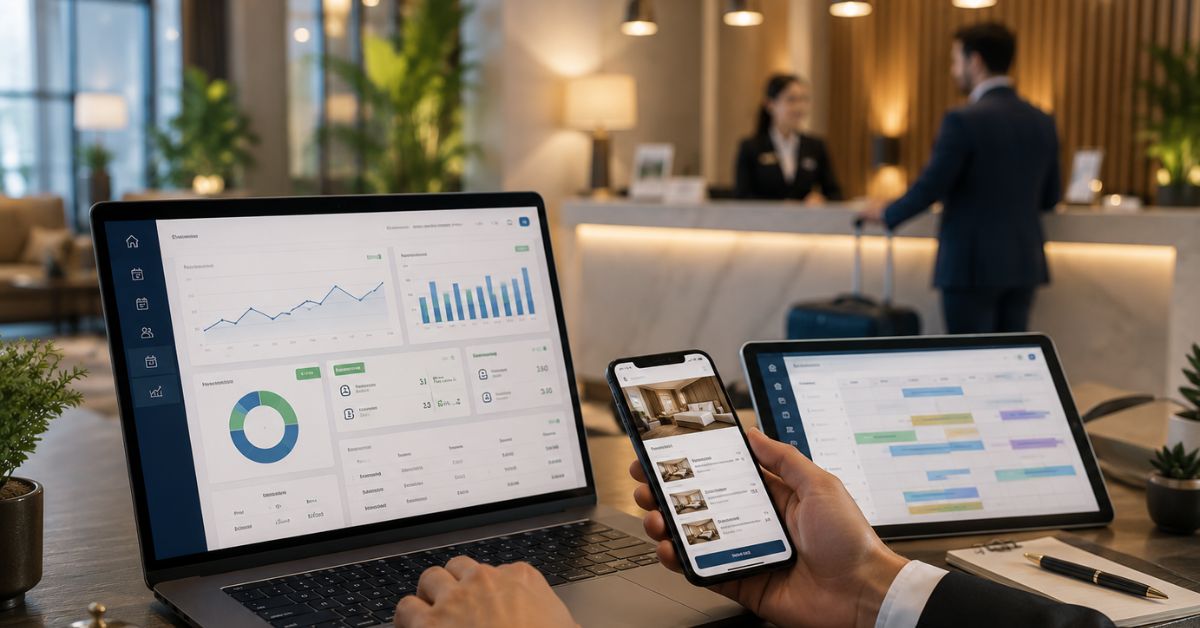
How Hotel Management Software Helped Increase Direct Bookings?
1. Real-Time Inventory Synchronization
One of the biggest advantages of using hotel management software was real-time synchronization. Before implementation, our team manually updated room inventory across multiple OTAs and booking channels. This process was slow, stressful, and prone to mistakes.
With the integrated hotel channel manager, room availability and rates are automatically updated across all platforms instantly.
This eliminated:
- Double bookings
- Rate inconsistencies
- Manual entry errors
- Delayed inventory updates
Guests could now see accurate room availability directly on our website, which increased trust and improved booking confidence.
2. A Faster and More User-Friendly Hotel Booking Platform
Our old website booking process was complicated and outdated. Potential guests often abandoned reservations midway because the booking process took too long or lacked mobile optimization.
After integrating a modern hotel booking platform, we noticed immediate improvements.
The new system offered:
- Mobile-friendly booking
- Faster checkout process
- Secure online payments
- Multiple payment options
- Instant confirmation emails
- Easy room selection
- Promotional code support
Guests could complete reservations in just a few clicks. This significantly improved conversion rates and encouraged more direct bookings.
3. Better Pricing Control with a Hotel Channel Manager
Pricing consistency is extremely important for independent hotels. Before using a hotel channel manager, managing rates across OTAs and our own website was difficult. Sometimes our direct website rates were unintentionally higher than OTA rates, discouraging guests from booking directly.
The hotel channel manager solved this issue by centralizing rate management.
Now we could:
- Update pricing instantly
- Maintain rate parity
- Launch direct-booking-only offers
- Create seasonal promotions
- Adjust prices based on occupancy
As a result, guests found competitive prices directly on our website, reducing the need to book through third-party platforms.
4. Personalized Guest Communication
Modern travelers appreciate personalized experiences. The hotel management software helped us collect and organize guest data more effectively. This allowed us to communicate directly with guests before and after their stay.
We started sending:
- Personalized welcome emails
- Special return-guest discounts
- Seasonal offers
- Birthday promotions
- Early booking incentives
These direct communication strategies increased guest loyalty and encouraged repeat direct bookings.
5. Seamless Integration with HOS Booking
One of the most impactful improvements came from implementing HOS Booking. HOS Booking streamlined the reservation experience for both guests and staff.
The platform simplified:
- Reservation management
- Guest check-ins
- Payment processing
- Availability tracking
- Booking confirmations
- Reporting and analytics
Because HOS Booking integrated smoothly with our hotel management software and hotel channel manager, our operations became far more efficient. Instead of juggling multiple disconnected systems, we could manage everything from one centralized dashboard.
This saved valuable staff time and improved overall service quality.
6. Improved Mobile Booking Experience
A growing number of travelers now book accommodations directly from smartphones. Previously, our website performed poorly on mobile devices, causing many users to abandon the booking process. After implementing the new hotel booking platform, mobile bookings increased significantly.
The system provided:
- Responsive design
- Faster page loading
- Mobile payment support
- Simplified navigation
- Easy booking forms
As mobile usability improved, direct bookings naturally increased.
7. Data-Driven Decision Making
Another major benefit of hotel management software was access to detailed reports and analytics.
Instead of relying on guesswork, we could now monitor:
- Booking trends
- Occupancy rates
- Revenue performance
- Guest preferences
- Cancellation patterns
- Direct booking sources
These insights helped us make smarter business decisions. For example, we discovered that weekend travelers were more likely to book directly through our website when offered exclusive packages.
Using this data, we created targeted promotions that further increased direct bookings.
8. Reduced Operational Workload
Small hotels often operate with limited staff. Before automation, our front desk team spent hours handling repetitive administrative tasks.
The hotel management software automated many processes, including:
- Reservation confirmations
- Payment tracking
- Room allocation
- Guest communication
- Availability updates
- Reporting
This allowed our staff to focus more on guest service rather than manual administrative work. Better guest experiences naturally translated into stronger reviews and more repeat direct bookings.
9. Building Stronger Brand Identity
One hidden advantage of increasing direct bookings is the opportunity to strengthen your hotel’s brand identity. When guests book through OTAs, the relationship primarily belongs to the third-party platform.
However, direct bookings allow hotels to:
- Build direct customer relationships
- Promote loyalty programs
- Collect guest feedback directly
- Encourage repeat stays
- Offer exclusive experiences
With our improved hotel booking platform and personalized communication strategy, guests began recognizing our hotel brand more strongly.
This contributed significantly to long-term growth.
The Results: More Than 35% Growth in Direct Bookings
Within several months of implementing the new system, our 20-room hotel experienced measurable improvements. The most important achievement was a direct booking increase of over 35%.
Additional benefits included:
- Lower OTA commission costs
- Higher profit margins
- Improved occupancy rates
- Faster reservation management
- Better guest satisfaction
- Reduced staff workload
- Improved online reputation
Most importantly, we gained greater control over our business. Instead of relying heavily on third-party platforms, we created a sustainable direct booking strategy supported by technology and better guest engagement.
Final Thoughts
Increasing direct bookings is one of the most effective ways for small hotels to improve profitability and strengthen guest relationships. With the support of HOS Booking, a reliable hotel channel manager, and an optimized hotel booking platform, we reduced OTA dependency and created a more sustainable business model.
For any independent hotel looking to grow direct revenue, improve efficiency, and enhance guest satisfaction, investing in the right hotel management software can make a measurable difference. Even a small 20-room property can achieve impressive results with the right technology and strategy.
